
Medical Device Compliance & 510(k) Technical Support
We help medical device teams turn connected-device architecture, data flows, telemetry, cybersecurity, and validation evidence into a clear FDA 510(k) support package.
Discuss your 510(k) project See what we supportConnected medical devices create a different evidence challenge
A device may already perform its medical function, but once it stores data, connects to the cloud, syncs records, supports remote access, or receives software updates, the 510(k) evidence package becomes more complex.
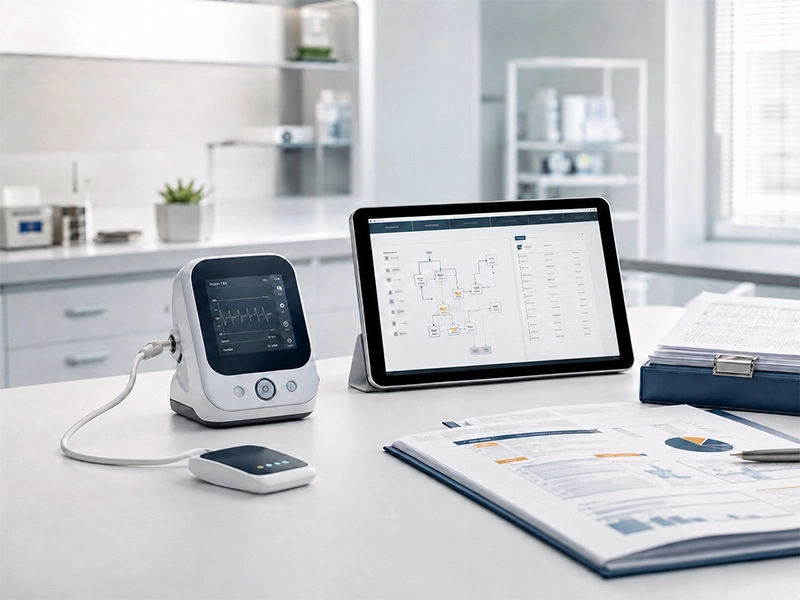
Make connected-device behavior visible, testable, and explainable
We help define and document how your connected device behaves from data capture to clinical availability — including normal operation, network failures, retries, incomplete uploads, duplicate data, version context, and security events.
Data integrity
Ensure records are complete, traceable, and correctly associated with the right device and software version.
Connectivity & synchronization
Define expected behavior for uploads, retries, acknowledgements, offline operation, and cloud synchronization.
Cybersecurity & software context
Support documentation around device identity, authentication, encryption, access control, updates, and software components.
Connected-system support for your 510(k) submission
We work across the connected layer of your product — from the device and its firmware to the cloud platform, portal, and the data moving between them.
Each area below turns into concrete, reviewable evidence: architecture your team agrees on, defined behavior under failure, and reports your quality process can point to.
We do not replace your regulatory team or QMS. We provide the connected-device technical evidence, platform documentation, and engineering support needed to strengthen your 510(k) package.
What you get
Everything the workflow produces, handed to your team as concrete artifacts — each one traceable back to source data.
From connected prototype to submission-ready evidence
A structured engagement that moves from understanding your device to handing your teams evidence they can point to — four stages, each building on the last.

Assess
Review your device architecture, intended use, connectivity model, cloud role, and current documentation.
Define
Map system boundaries, data flows, risks, sync behavior, telemetry needs, and evidence gaps.
Implement
Configure device-cloud workflows, reports, monitoring, exports, and platform documentation.
Support
Help your engineering, quality, validation, and regulatory teams connect technical evidence to 510(k) materials.
Built for connected-device evidence, not just device connectivity
KaaIoT provides the infrastructure and engineering support needed to identify devices, capture events, track versions, manage synchronization, monitor connectivity, generate reports, and export evidence for validation and quality processes.
See it applied to a real device
We walked a portable connected ECG monitor through this exact workflow — from the first prototype demo to the lost-acknowledgement test and the QMS handoff.
FDA 510(k) Support for a Connected ECG Monitor
Read the article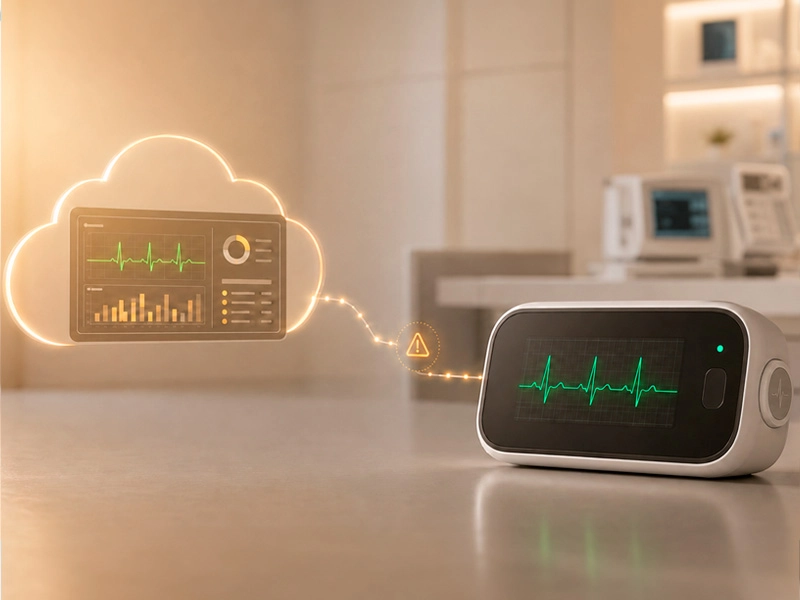
Preparing a connected medical device for FDA 510(k)?
Let's review your connected-device workflow and identify what technical evidence, documentation, and reporting you need to support your submission.
Schedule a consultationGo deeper into each part of the evidence work
The 510(k) workflow above touches several disciplines. Each of them is a service area of its own, with its own deliverables and documentation.
Cybersecurity for Connected Medical Devices
Threat-model-driven security controls, authentication and access evidence, audit log examples, and the cybersecurity documentation FDA expects in premarket submissions.