
How to reduce costs with energy management through IoT
March 11, 2026Energy prices are skyrocketing – and businesses are feeling the heat. The global energy costs in 2025 maintained pre-pandemic highs because of surging market demand and disrupted supply chains. Companies aren’t just watching their utility bills rise; they're being forced to rethink entire operations to stay profitable. From manufacturing plants to office buildings, energy inefficiency is draining resources faster than ever. The solution? Smarter strategies powered by IoT. Take the Kaa platform, for example. It enables advanced energy management through real-time monitoring, IoT-powered predictive maintenance, and automated controls, which enable companies to optimize their savings without reducing production levels. A smart system enables operators to detect energy waste instantly compared to waiting numerous weeks to receive their utility bills.
IoT platforms like Kaa’s end-to-end energy asset management solution can help businesses embrace sustainability by integrating renewable energy sources and optimizing power usage across facilities. It’s not just about saving money; it’s about staying competitive in a world where energy efficiency is a game-changer. If rising energy costs have you scrambling, it’s time to rethink your strategy. IoT solutions enable you to acquire critical knowledge and complete control, which allows you to operate energy more effectively and sustainably. Are you prepared to regain authority over your energy expense costs? This article will demonstrate how to reduce costs with IoT energy management.
The problem with rising energy costs
Energy costs are more than just a business expense – they’re now a driving force shaping corporate strategies and consumer prices. Businesses of all sizes are feeling the financial impact of skyrocketing energy bills: small operations struggling to keep the lights on or multinational corporations rethinking production schedules. To stay competitive and sustainable, forward-thinking companies must rethink how they consume, manage, and procure energy.
The global energy crisis
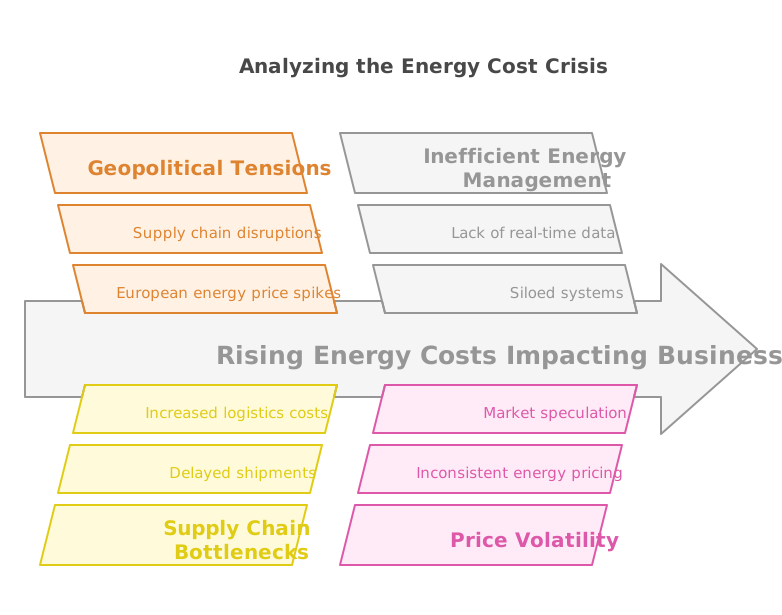
Energy costs are no longer just a line item in business budgets – they've become a primary strategic concern. Price volatility has caused global industry disruption in recent years. Geopolitical tensions and supply chain bottlenecks were major factors in 2023 when European power and natural gas prices reached all-time highs and surpassed pre-pandemic levels. In the meantime, according to Statista, companies in the United States had to deal with a 35% increase in industrial electricity bills over 2019. These surges' knock-on consequences have caused businesses to raise prices, reduce output, or look for other ways to solve their problems. There is a greater need than ever for creative energy management techniques because of the severe financial strains.
Why traditional energy management isn’t efficient no more
As of 2025, the conventional approaches many businesses use to control their energy consumption aren't enough. These systems frequently function in silos, are unable to give real-time data, and are unable to offer insights that enable prompt business action. Imagine finding out your manufacturing plant has wasted energy for weeks – only when the utility bill arrives. By then, the damage has already been done. Furthermore, because of their rigidity, traditional systems make integrating renewable sources challenging or adjusting to changing energy demands. Lack of predictive analytics also leads to reactive maintenance, which causes unscheduled downtime and further reduces profitability. In a time when energy efficiency is a competitive advantage, businesses run the danger of slipping behind if they don't implement smarter, data-driven solutions.
How IoT transforms energy management
IoT has changed the energy management sector by giving businesses the means to monitor, control, and optimize energy use in real time. IoT platforms, such as Kaa, use data analytics and sensor networks to provide actionable insights that help businesses stay ahead of inefficiencies and make better decisions. Let's break down how IoT streamlines energy management.
Real-time energy monitoring
Imagine being able to see the precise amount of energy your company is using at any given time. This is made feasible by IoT, which gathers and sends real-time data from sensors positioned throughout different operations. Businesses can swiftly spot inefficiencies and take prompt corrective action when they have ongoing monitoring. For example, smart meters can identify anomalous energy usage increases and initiate rapid remedial action. This way, businesses can drastically cut operating expenses by up to 20% via IoT-based energy monitoring.
Predictive maintenance with IoT
One of the most powerful applications of IoT is predictive maintenance. It works in the following way: by continuously analyzing data from equipment sensors, businesses identify potential issues before they escalate into costly failures. This proactive approach ensures minimal downtime and reduces maintenance expenses. In the manufacturing sector, predictive maintenance has cut equipment downtime by up to 50% and maintenance costs by as much as 40%. These savings boost operational efficiency and give companies a competitive edge by maximizing uptime.
Automated energy control systems
IoT platforms like Kaa harness the power of AI and machine learning to automate energy controls. Using real-time data and usage patterns, these systems can modify the functioning of machines, HVAC systems, and lighting. To save energy, smart building management systems, for instance, can recognize when a room is empty and automatically modify the climate control settings. According to studies, these automated solutions can save energy use by as much as 20%. Lowering carbon emissions not only results in economic savings but also supports sustainability objectives.
Benefits of using Kaa for energy management
Implementing IoT solutions is only as effective as the platform driving them. Kaa offers businesses a versatile and robust platform for energy management. Let’s take a look at benefits of IoT energy management:
- Customizable and scalable IoT platform. Because of Kaa's adaptability, companies can create customized energy management solutions to meet their unique requirements. The modular architecture of Kaa guarantees smooth scalability whether you're managing a single facility or a network. Businesses can expand more easily because of this flexibility without having to redesign their energy management systems completely.
- Easy integration with existing systems. One of Kaa’s standout features is its ability to integrate seamlessly with existing infrastructure. This means businesses can incorporate Kaa into their current operations without the hassle of extensive system overhauls. Energy management procedures are streamlined by the platform's compatibility with several protocols and standards, guaranteeing seamless device connection.
- Data-driven decision making. Businesses can learn much about their energy consumption behavior through Kaa's data analytic tools. Through the platform, they obtain complete reports about peak operating periods, efficiency deficits, and areas where improvement can be made. The received data enables businesses to develop targeted plans for maximizing their energy efficiency while obtaining better energy pricing and making predictions about their future power requirements.
Conclusion
Energy costs continue to rise, and businesses cannot afford to stick with outdated energy management practices. IoT solutions like the Kaa IoT energy management system offer a more innovative, more efficient way to monitor, control, and optimize energy consumption. The benefits are clear: reduced costs, enhanced operational efficiency, and a smaller environmental footprint. If your business is ready to make the leap toward smarter energy management, Kaa has the tools and expertise to help you succeed. It’s time to turn rising energy costs from a problem into an opportunity for innovation. Ready to start your energy-saving journey? Contact us today.