
Validatable IoT infrastructure for connected medical devices
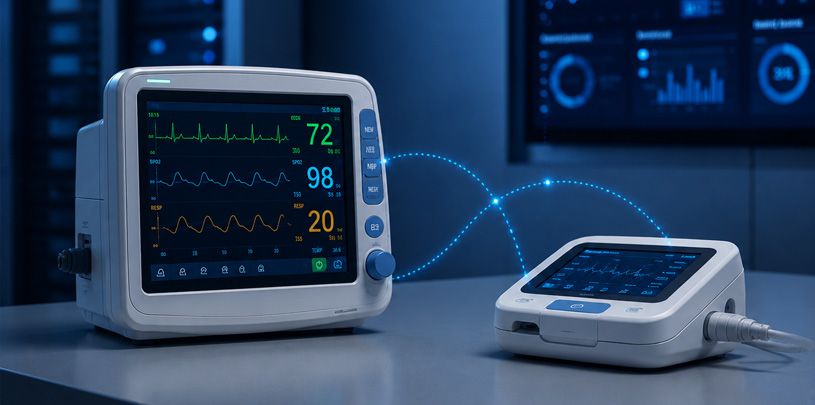
The medical device industry is becoming increasingly connected. Remote diagnostics, wearable devices, home healthcare equipment, laboratory instruments, and smart monitoring systems all rely on continuous communication between devices, users, and business applications. Yet building connected medical device software involves far more than collecting telemetry from a device. Development teams must create secure communication channels, manage device fleets, process and store data, support remote operations, integrate with enterprise systems, and maintain visibility across thousands of deployed devices. Many organizations discover that a significant portion of their development effort ends up focused not on the medical device itself, but on building and maintaining the backend infrastructure required to support it.
This is where the KaaIoT Platform for Medical Devices provides value. Instead of developing the connected-device infrastructure from scratch, manufacturers can start with a proven IoT platform that provides the core building blocks required for connected medical products while supporting validation and quality processes common in regulated environments.
Why medical device companies struggle with connected software
A connected product typically requires far more than a mobile application and a cloud database. Devices must be provisioned, authenticated, monitored, updated, and managed throughout their lifecycle. Telemetry must be collected, stored, visualized, and shared with different user groups. Alerts and workflows need to be triggered automatically when predefined conditions occur. Administrators require operational visibility, while customers need secure access to their own data. The complexity grows as products evolve: new integrations are added, additional user roles appear, security requirements expand, more devices are deployed. What initially looked like a relatively simple backend gradually became a large operational platform.
The challenge becomes even greater in medical environments where teams must understand, document, and test how connected-device systems behave throughout the product lifecycle. The result is that engineering teams often spend months building infrastructure that is largely identical from one project to another instead of focusing on the features that differentiate their medical device.
Building a connected medical device platform from scratch is expensive
Many organizations begin with a custom approach because it appears flexible and cost-effective during the early stages of development. A small telemetry service is built. Then a database is added. Dashboards follow. Alerting logic is implemented. APIs are created. Device provisioning is introduced. Authentication, permissions, reporting, monitoring, and logging capabilities are gradually layered on top. Eventually, the organization has created its own IoT platform.
While this approach can work, it creates significant long-term responsibilities. Every component must be maintained, documented, secured, tested, and updated. Engineering teams become responsible for platform evolution in addition to product development. New projects frequently require similar functionality, resulting in duplicated effort across product lines. The hidden cost often appears later in the product lifecycle. Teams must answer questions about device authentication, data handling, user permissions, auditability, software changes, operational procedures, and testing activities. Documentation and validation activities become increasingly complex because the infrastructure consists of numerous custom services developed over time. For many manufacturers, building and maintaining this infrastructure does not create competitive advantage. It simply consumes resources that could otherwise be directed toward product innovation.
What KaaIoT platform for medical devices provides
KaaIoT provides a complete connected-device platform that serves as the operational foundation for medical device software. Rather than assembling multiple services and tools, organizations can use a unified platform designed specifically for connected-device applications.
Device connectivity and fleet management
The platform provides the capabilities required to connect, provision, authenticate, and manage devices throughout their lifecycle. This includes device registration, endpoint provisioning, secure authentication, certificate-based connectivity, metadata management, and device fleet administration. Whether managing hundreds or thousands of deployed devices, teams gain centralized visibility into device status, connectivity, and operational performance. Instead of building custom provisioning and device management services, manufacturers can leverage platform capabilities that are already available and ready for deployment.
Telemetry, data management, and dashboards
Connected medical devices generate valuable operational and diagnostic data that must be collected and processed reliably. KaaIoT supports MQTT and HTTP-based telemetry ingestion, time-series data storage, dashboard creation, reporting, and API access. Engineering teams can build monitoring applications, operational dashboards, and customer portals without first creating an entire data infrastructure stack. The platform helps transform raw device data into actionable insights while providing a structured environment for data management and visualization.
Rules, alerts, and workflow automation
Many connected medical device applications depend on automated workflows. Devices may need to trigger service notifications, generate operational alerts, forward information to external systems, or initiate maintenance procedures based on telemetry conditions. The KaaIoT Rule Engine allows teams to define and manage these workflows without building separate automation services for each project. Rules can process incoming data, trigger alerts, execute commands, invoke webhooks, and integrate with external business systems. This enables organizations to automate operational processes while maintaining centralized control over business logic.
Security and access control
The platform includes role-based access control, user management, tenant isolation, authentication mechanisms, and administrative controls that help organizations manage access to devices and data. Different users can be granted access according to their responsibilities, whether they are service engineers, support teams, distributors, healthcare providers, or system administrators. Centralized security controls also help simplify operational management across multiple deployments and customer environments.
Flexible deployment options
Medical device manufacturers often have unique infrastructure and compliance requirements. Some organizations prefer fully managed cloud deployments. Others require private cloud environments or dedicated infrastructure. KaaIoT supports multiple deployment models, allowing organizations to select the approach that best aligns with their operational, security, and business requirements. This flexibility enables companies to scale their connected-device strategy without being constrained by a single deployment architecture.
Designed to support validation and quality processes
Validation is often one of the most time-consuming aspects of connected medical device development. The challenge is not simply proving that software works. Teams must demonstrate how the system behaves, how data flows through the platform, how users are authorized, how changes are managed, and how functionality has been tested. This becomes difficult when the connected-device layer consists of numerous custom services, undocumented configurations, and project-specific implementations.
KaaIoT addresses this challenge by providing a structured platform environment supported by documentation and validation-related materials. The platform can be delivered with a validation support bundle that helps organizations document, understand, and test the connected-device layer. Depending on project requirements, this may include architecture documentation, data flow descriptions, security control summaries, release information, traceability templates, example test scenarios, and engineering support during validation activities.
Typical medical device applications
The KaaIoT Platform for Medical Devices can support a broad range of connected healthcare and medical technology solutions.
Common applications include:
- Remote patient monitoring systems;
- Connected diagnostic equipment;
- Wearable medical devices;
- Home healthcare devices;
- Laboratory equipment monitoring;
- Device fleet management platforms;
- Service and maintenance portals;
- Post-market device monitoring;
- Equipment utilization analytics;
- Customer and distributor portals;
- Gateway management solutions;
- Operational monitoring systems.
Each application has its own intended use, risk profile, and regulatory considerations. A maintenance dashboard for service engineers has very different requirements than a patient-facing monitoring application. Likewise, operational analytics differ significantly from clinical decision-support systems. The platform provides the connectivity and operational foundation, while manufacturers retain control over product requirements, risk management activities, validation strategies, and regulatory obligations.
Faster development without rebuilding the IoT foundation
Every connected medical device requires a reliable backend infrastructure. The question is whether engineering teams should spend months building that infrastructure themselves or start with a platform that already provides the essential capabilities. Using the KaaIoT Platform for Medical Devices, manufacturers accelerate development, simplify operations, and reduce the effort associated with building and maintaining custom connected-device infrastructure. Instead of recreating device management services, telemetry pipelines, dashboards, alerting systems, APIs, access controls, and operational tooling for every new project, teams can focus on the areas that create real business and clinical value. The result is a more predictable development process, faster time-to-market, and a connected-device foundation that is easier to understand, support, and validate throughout the product lifecycle.